Why Your Resume Gets Filtered by ATS (and How AI Cover Letters Get You Past It)
You’ve probably heard “75% of resumes are never seen by a human.” That specific figure can’t be traced to a real study — so let’s use numbers that can. They’re no less sobering.
The gate before the human
Nearly every large employer screens applications with software first: 97.8% of Fortune 500 companies use an ATS (Jobscan, 2025). And Harvard Business School’s Hidden Workers report found these systems pre-filter or rank out up to 94% of middle-skill and 92% of high-skill candidates before a recruiter sees them — often screening out perfectly qualified people on technicalities.
The takeaway isn’t “game the bots.” It’s: structure your resume so it parses cleanly (standard headings, real text not images, the keywords from the job description) so you survive to the human stage.
When you reach a human, you get about 7 seconds
An eye-tracking study by Ladders found recruiters spend roughly 7.4 seconds on the initial scan of a resume. Clarity and relevance in the top third decide whether you make the shortlist.
Cover letters still move the needle
It’s fashionable to call the cover letter dead. Hiring managers disagree:
That last number is the opportunity: nearly half of managers will interview a borderline candidate on the strength of the letter alone. A tailored, specific cover letter is still one of the highest-leverage things you can send — which is exactly what cvApplyr generates for every role.
cvapplyr
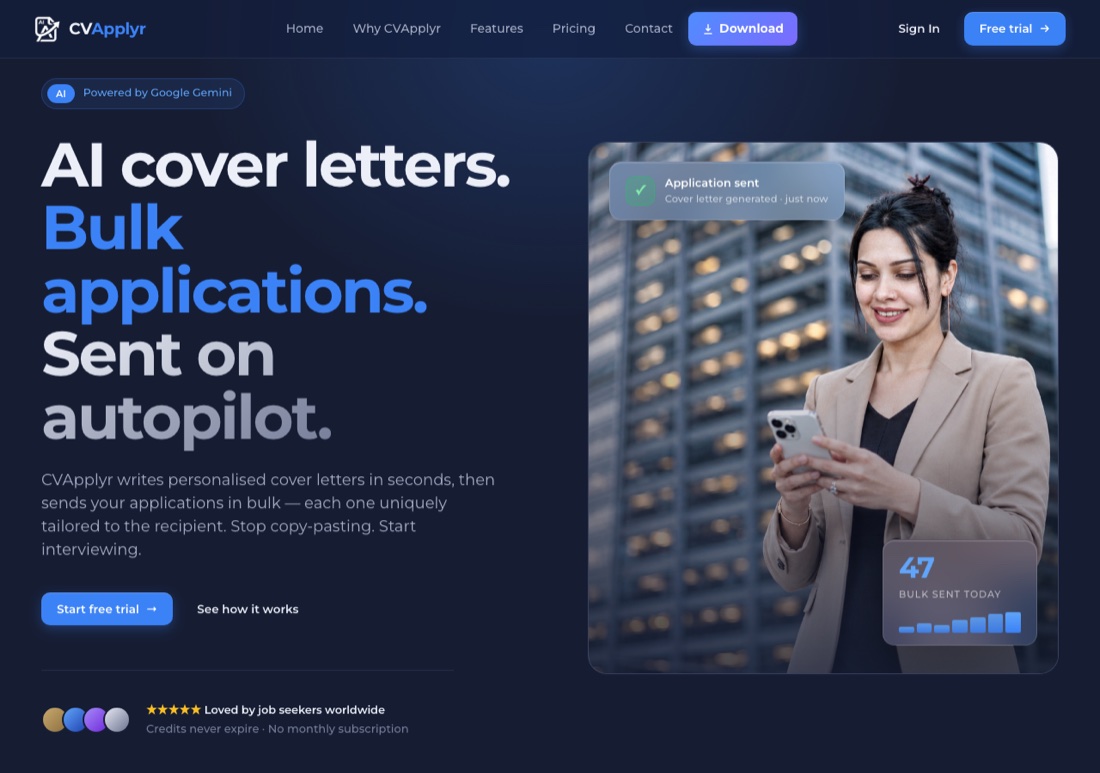
cvApplyr writes a tailored cover letter for every role and bulk-applies in minutes — ATS-ready, each one uniquely personalised.
Join the discussion
Got a question or your own experience to share? Comments are moderated lightly to keep things useful.